Mah Jongg Is Booming. Is Your Club's Group Built to Grow With It?
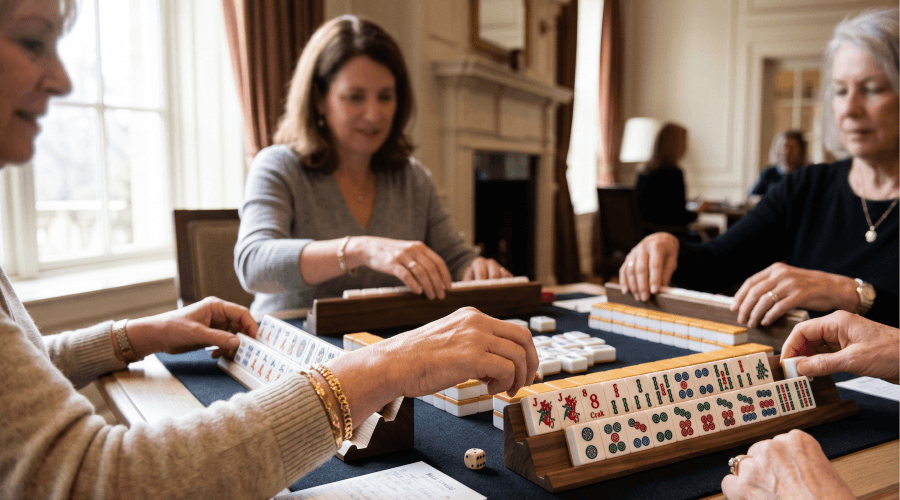
Here is something many club staff have not said out loud yet: Mah Jongg may be the fastest-growing activity on your calendar. Not pickleball. Not the wine series. Mah Jongg. And when a club Mah Jongg group stalls, the cause is almost never fading interest. It is that the club cannot bring new players to a table fast enough to keep up with the ones already walking in the door.
This is a different problem than the one most long-running club games have. It is a growth problem, and growth problems are easy to miss because nothing looks broken. The room is full. The regulars are happy. Meanwhile, three new members who took a lesson over the winter are standing at the edge of the room with nowhere to sit.
The game quietly taking over the activity calendar
For most of the last century, Mah Jongg was a steady, older, deeply loyal game - the kind of standing Tuesday group that ran the same way for decades. That is no longer the whole story. Merriam-Webster now describes the game as experiencing a major resurgence among younger generations looking for meaningful ways to connect offline. Eventbrite reported that Mah Jongg events nationwide rose 179 percent between 2023 and 2024. The National Mah Jongg League, now in its 89th year, counts its membership in the hundreds of thousands.
What that means for a club is simple. You are no longer maintaining a fixed group of the same twelve players. You are absorbing demand - from longtime members, from spouses, from newer and often younger members who learned on social media or at a friend's kitchen table and now want a regular game. The interest is arriving on its own. The question is whether the club is built to receive it.
Why a growing group is harder to run than a stable one
A stable group is a logistics task. A growing group is a sorting task, and sorting is where clubs leak players.
You cannot seat a brand-new player at a table of members who have played together for fifteen years. The newcomer is slow, unsure, and acutely aware of holding everyone up. The regulars are patient for about twenty minutes. Both sides leave the session a little deflated, and the new member quietly decides Mah Jongg is not for them - not because they dislike the game, but because there was no table where they belonged yet.
Bridge groups run into a version of this, and we have written about why those groups are more fragile than they look. But Mah Jongg's challenge runs the other direction. Bridge groups tend to fight decline. Mah Jongg groups, right now, tend to fight their own growth. The fix is not preservation. It is a way to route players to the right table at the right level.
The April reset no other club game has
Here is the structural quirk that makes Mah Jongg unlike anything else on your calendar. Every April, the National Mah Jongg League releases a brand-new card - a fresh set of standardized hands for the year. Buying the new card and learning its hands is, for American Mah Jongg players, an annual ritual. Overnight, the entire room is relearning the game at the same time.
For a club, this is both a challenge and a gift. The challenge is that every spring your most confident regulars briefly become students again, and any beginner who finally got comfortable on last year's hands has to start over. The gift is that this happens on a schedule. The April card changeover is a predictable, recurring spike in demand for lessons, refreshers, and practice tables. A club that plans for it - a card-change clinic, a refresher session, a beginner series timed to the new card - turns the most disruptive moment of the year into the best recruiting moment of the year.
The teaching pipeline is the real engine
The clubs that grow Mah Jongg well all have one thing in common. They do not treat the group as a single table. They treat it as a pipeline: a lesson or beginner clinic, then a supervised beginner table where new players can be slow without apology, then open play once they are table-ready.
Most of the leakage happens between those stages. A member takes the winter lesson series, feels good, and then finds there is no beginner-friendly table to graduate into - only the intimidating Tuesday regulars. So they drift. The club did the hard part, teaching them, and then lost them at the easy part, seating them. A working pipeline closes that gap, and it is the difference between a group that grows and a group that simply churns through beginners.
What it looks like when the club builds for it
None of this requires the club to become a Mah Jongg authority. It requires a little infrastructure underneath the group so that staff are not running it out of their inbox.
Signups that protect the table of four. Mah Jongg is four to a table, and an uneven count leaves someone stranded. GroupValet's Smart Signups confirm players in groups of four - the first three sit Pending until the fourth signs up, at which point the table is set and all four are notified. Beyond that, you can run separate beginner and open tables so a nervous newcomer is never accidentally seated with the experts. The sorting happens in the signup, not in the room.
A File Library so the rules live with the group, not in one person's bag. Mah Jongg runs on a shared rule set, and that rule set changes every April. A File Library lets the group store the rules of Mah Jongg, the club's house guidelines, and reference material where every member can find them - so a beginner does not have to ask which hands are legal, and a returning player can pull up the current expectations before they arrive. When the reference lives with the group, the teacher is not the only source of truth.
A waitlist that doubles as a demand signal. When tables fill and players keep signing up, the waitlist is not just a backup list. It is data. It tells you, in plain numbers, how many members want to play and cannot get a seat - exactly the case you need to justify adding a session, a table, or a paid instructor. A waitlist turns unmet demand from an invisible loss into a visible argument for growing the program.
Reminders the club controls. A reminder the day before keeps tables full, and a reminder each April to bring the new card keeps the season from starting in confusion. When reminders come from the club rather than one member's personal phone, the club has visibility into who received them.
A roster the club owns. Mah Jongg programs often run on one passionate teacher or organizer. When the group's roster, history, and signups live in a club-owned system, the program survives that person moving on - and the club can actually see beginners converting into regulars over time.
Why this matters for club staff
Mah Jongg is a rare thing in club programming: a low-cost activity that is genuinely growing, pulls in younger members and spouses, fills shoulder hours, and asks very little of the kitchen or the grounds. It is one of the easiest member-engagement wins available to a club right now.
But the win is not automatic. The clubs that capture it are not the ones with the most enthusiastic players. They are the ones that build a way to teach, sort, and seat those players faster than interest cools. The tiles take care of themselves. The table is the part you plan for.
If you want to see how Smart Signups, a waitlist, and a shared File Library would fit your club's Mah Jongg group, you can grab a 30-minute demo.
FAQ
How do you run a Mah Jongg group at a country club when more members want to play than you have tables for?
Use a signup system that confirms players in groups of four and waitlists everyone beyond table capacity. Run separate beginner and open tables so newcomers are not seated with longtime players. The waitlist also shows you how much unmet demand exists, which tells you when to add a session or a table.
What happens to a club Mah Jongg group when the new NMJL card comes out in April?
Every April the National Mah Jongg League releases a new card with that year's hands, so the whole group effectively relearns the game at once. Clubs that handle it well plan a refresher clinic and a beginner series around the changeover, and store the current rules in a shared File Library so every member can reference them.
How do you bring beginners into an established club Mah Jongg group?
Create a stage between the lesson and open play - a supervised beginner table where new players can be slow without holding up the regulars. Many beginners are lost not during the lesson but afterward, when there is no table at their level to join. A visible signup and a clear beginner track give them an obvious next step.
Is American Mah Jongg different from Chinese Mah Jongg to manage at a club?
The rule differences matter to players, not to the operational setup. Both need the same things from the club: a reliable four-player signup, a waitlist, reminders, a shared place to store the rules, and a roster the club owns. If your club runs more than one style, keep their signups and reference files separate so players join the right table.
A booming Mah Jongg group is a good problem to have. It only stays a good problem if the club builds the table before the players show up.


