How Clubs Naturally Pull Members Together
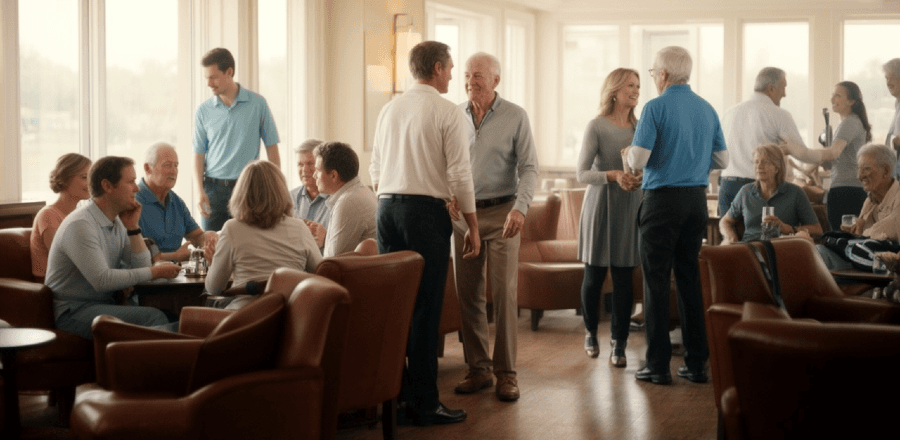
Some clubs consistently bring people together. Members seem to know what is happening, groups form without friction, and participation builds on itself year after year. Other clubs, with similar amenities and membership profiles, struggle to create the same sense of momentum.
The difference is not the number of events offered or how often emails are sent. It is how the club creates social gravity.
Social gravity is the force that pulls members toward shared experiences. When it is strong, engagement feels natural. When it is weak, even well designed programs require constant effort to survive.
This post explains how social gravity works inside clubs, and how it can be intentionally strengthened without increasing staff workload.
How Social Gravity Works in Clubs
Social gravity is created when the environment makes participation easy, visible, and self reinforcing.
In clubs with strong social gravity:
⫸ Members can quickly see what is happening
⫸ Joining activities feels low effort and low risk
⫸ Groups persist even when leadership changes
⫸ Participation grows through exposure, not persuasion
In clubs with weak social gravity, engagement depends on reminders, manual coordination, and staff intervention. Momentum exists only while someone is actively pushing it.
How Clubs Lose Social Gravity
Social gravity does not disappear overnight. It erodes when friction is introduced into the member experience.
Visibility Breaks Down
Members cannot join what they cannot see. Activities may exist, but discovery depends on being on the right email list, knowing the right person, or hearing about it at the right time.
When visibility is fragmented, participation becomes accidental rather than repeatable.
Coordination Becomes Personal
Many groups rely on one or two organizers using text threads, spreadsheets, or personal email. When those individuals step back, the group often fades, even if interest remains.
Social gravity weakens when participation depends on personal effort instead of shared infrastructure.
Continuity Is Lost
Each season starts from scratch. Past participation is not visible, and successful groups are not reinforced. Members who would have returned never see the opportunity.
How GroupValet Strengthens Social Gravity
GroupValet does not attempt to manufacture engagement. It strengthens social gravity by removing friction from how members discover, join, and sustain activities.
Unified Visibility
All groups and activities live in one place. Members can browse, discover, and join without needing insider knowledge or manual invitations.
Member Driven Momentum
Groups are managed by the people who care about them. Scheduling, communication, and signups happen without staff intervention, eliminating single points of failure.
Frictionless Participation
Joining a group or activity feels like part of the club experience, not an external process members need to figure out.
Built In Continuity
Participation history carries forward. Clubs can see what resonates over time, which groups are growing, and where engagement is shifting.
How Social Gravity Compounds Over Time
When social gravity is strong, participation reinforces itself.
Members see activity, join more easily, invite others, and return. New members integrate faster because the path to involvement is obvious. Staff spend less time rebuilding momentum because it no longer resets each season.
Social gravity is not a program, a campaign, or a seasonal initiative. It is an outcome of design.
Designing for Connection
The strongest club communities are not managed into engagement. They are designed for it.
When the environment makes connection easy, members do the rest. They form traditions, sustain groups, and create the energy that defines the club experience.
If you want to see how GroupValet helps clubs strengthen social gravity without increasing staff workload, you can request a brief walkthrough here:
Request a demo


